

Sports Injury & Performance Care in West Omaha
Sports Injury Care in West Omaha
Get back to your sport faster and less likely to re-injure. Whether you compete or play on the weekend, we treat the whole pattern, not just the spot that hurts. Dr. Becker has worked with numerous NFL, NBA, and MLB players, plus college and pro female athletes. The same care that gets them back on the field works for weekend athletes too.
- ★★★★★ 5.0 Google (343)
- Best of Omaha
- 18 years treating athletes
- Sports-medicine training
- Same-week appointments
- BBB A+ rated
The spot that hurts is usually not the problem
Most sports injuries are not just “the muscle that hurts.” They are a chain reaction where one weak or stiff link got overloaded and something downstream finally gave out. The hamstring that keeps pulling is often a hip that does not move well. The knee pain is often a foot and ankle that are not doing their job. The shoulder is often a stiff upper back.
Treating only the painful spot is why a lot of athletes get a few weeks of relief and then re-injure the same area. We treat the pattern, so the fix holds.
The injuries we see most often
Sports injuries fall into two buckets: acute (one thing happened, like a bad landing or a sudden twist) and overuse (repetitive stress that built up over a season). Both respond well to chiropractic care, dry needling, and a smart return-to-play plan.
- Hamstring and groin strains from sprinting, cutting, and jumping
- Shoulder and rotator cuff pain from overhead motion (volleyball, baseball, swimming)
- Low back pain from lifting and rotation sports (golf, tennis, gymnastics)
- Knee pain from running, cutting, and squatting
- Plantar fasciitis and shin splints from running and court sports, see our plantar fasciitis page
- Tennis and golfer’s elbow from repetitive grip and swing
- IT band syndrome from running and cycling
How sports injury care is different here
Treating a sports injury is not just about making the pain stop. It is about getting you back to your sport without the injury coming right back. Here is the order we work in:
Find what actually failed. A functional movement screen and sport-specific testing show us the weak link, not just the sore spot.
Restore joint motion. Adjustments to the joints that are stiff or guarding take load off the structure that got hurt.
Release the muscle. Dry needling for the trigger points that show up with almost every sports injury. This is often the fastest tool for return-to-play.
Rebuild it. Specific exercises to restore the strength and stability that broke down. Skip this and the injury usually comes back.
Return-to-play plan. A realistic timeline, what is safe at each stage, and how to know when you can go full intensity.
What to expect at your first visit
- History. Your sport, level, training volume, when it started, exactly where you feel it, and what makes it worse.
- Exam. Functional movement screening, sport-specific motion testing, hands-on assessment of the injured tissue, and a neurological screen if it is relevant.
- Plan. A clear explanation of what is injured, what we are treating, your timeline back to activity, and what to do between visits.
- First treatment. Most athletes get adjusted and needled at the first visit. Early relief is common; the durable change comes over a series.
How fast can I get back?
- Minor muscle strains: 1 to 3 weeks to full
- Moderate sprains and strains: 4 to 8 weeks with a phased return
- Overuse injuries: 4 to 12 weeks with a gradual load build-back
- Severe injuries (full tears, fractures): longer, and may need imaging or a referral
The first exam tells us where you fall, and we give you specific milestones so you know it is working.
Why athletes in West Omaha pick Becker
Sports-medicine training. Dr. Becker completed postgraduate sports-medicine (CCSP) education and has treated athletes at every level for 18 years, including numerous NFL, NBA, and MLB players and several college and professional female athletes.
We treat the whole pattern, not just the part that hurts today, so you stop re-injuring the same spot.
Multiple tools, one office. Adjustments, dry needling, and acupuncture each play a role in recovery. We use whichever combination fits your case.
You can keep moving. Complete rest is rarely the answer. We tell you what you can train, what to avoid, and when to push.
Honest about referrals. Some injuries need an MRI or an orthopedic consult. If yours does, we tell you and refer out.
Most major insurance plans cover chiropractic care for sports injuries. HSA and FSA cards welcome. We verify benefits before your first visit. See accepted plans →
Athletes who get treated here
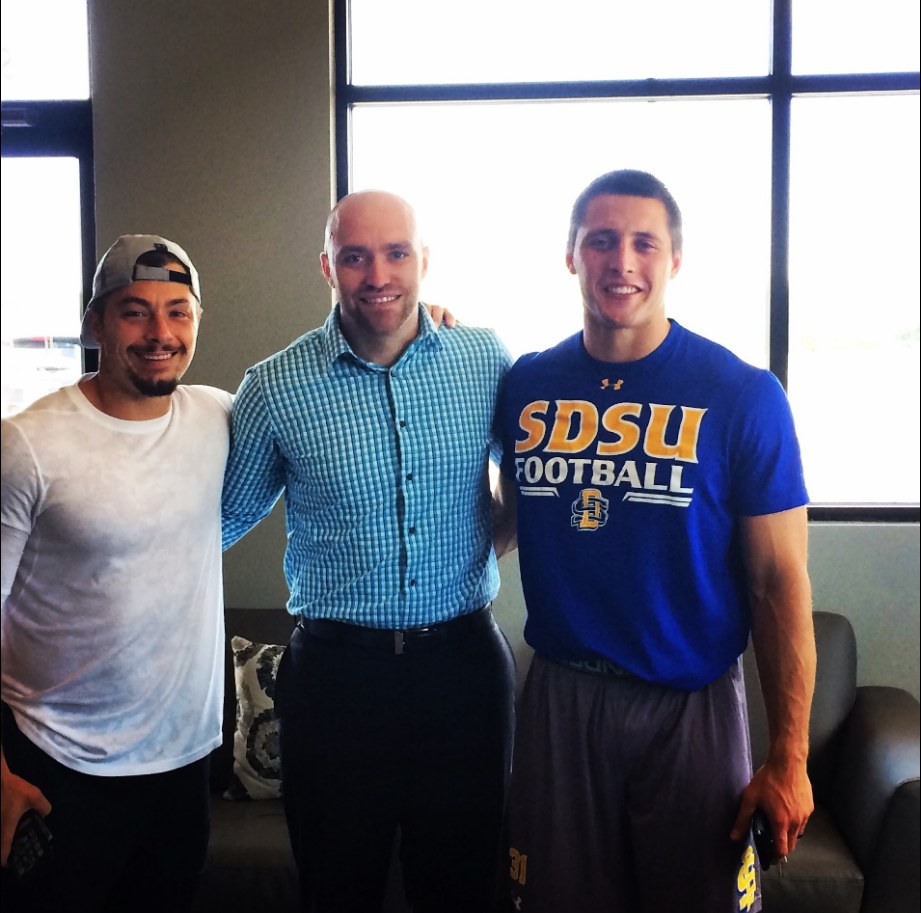
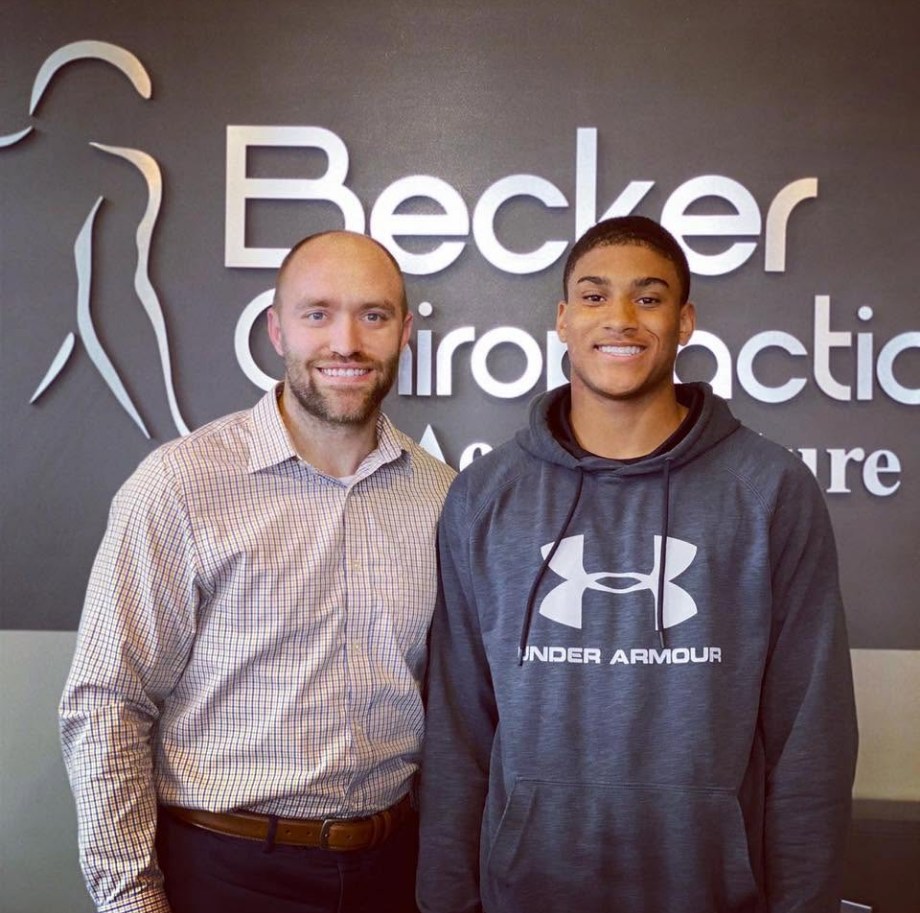
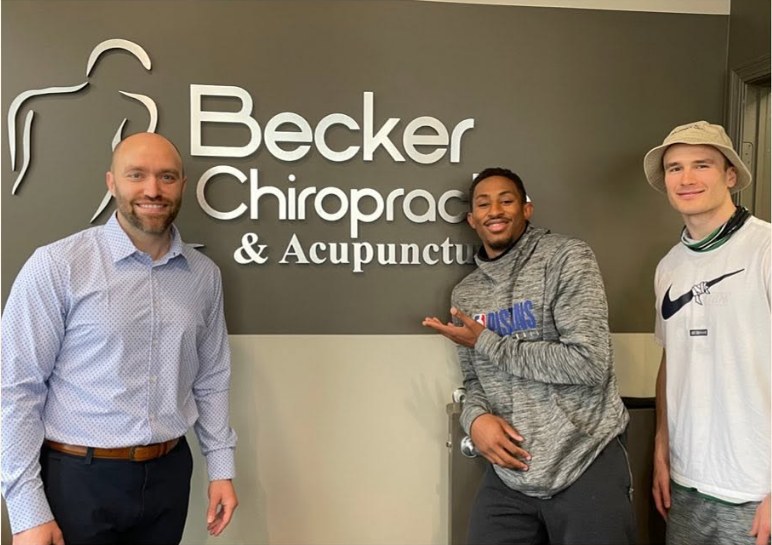
Dr. Becker has worked with athletes at every level, from youth sports to the pros. That list includes NFL running backs Danny Woodhead, Zach Zenner, and Roy Helu, NFL quarterbacks Easton Stick and Cole Payton, New York Giants tight end Thomas Fidone II, Atlanta Falcons safety Xavier Watts, Nebraska volleyball standout Dani Mancuso, and basketball players Craig Sword, John Tonje, Hunter Sallis, and Max Murrell. A few of them:
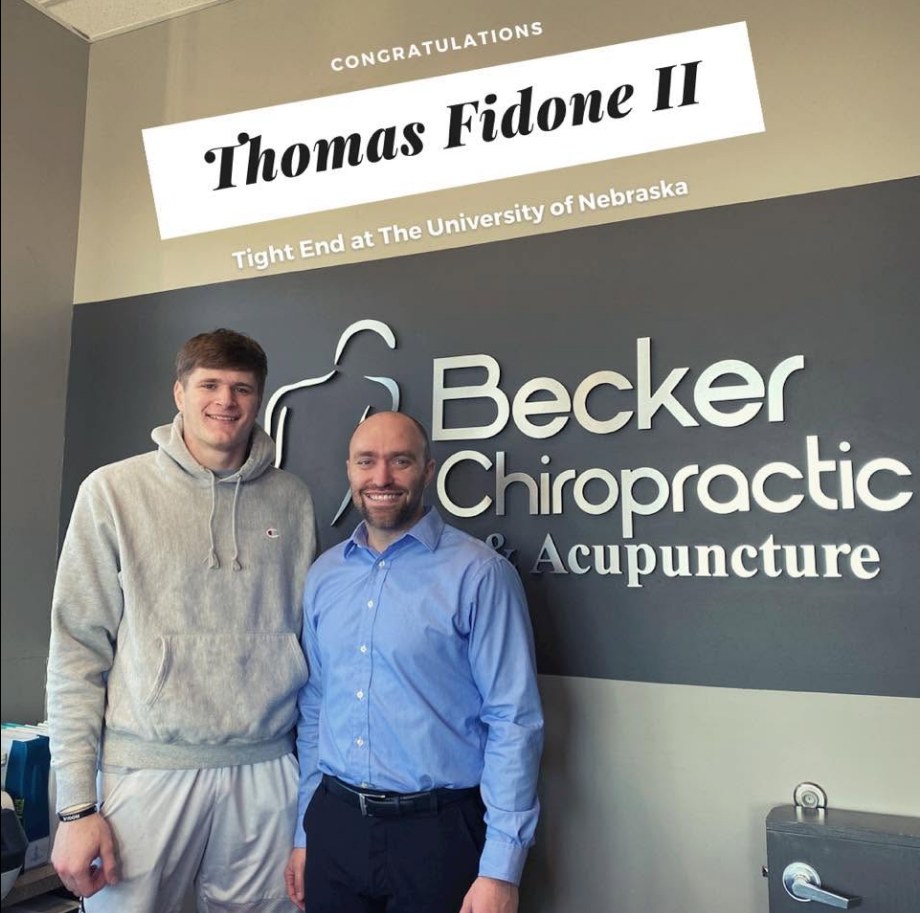
“Definitely a 10/10. As an athlete I struggled with tendonitis (jumpers knee) and he helped me through that tremendously. Along with some old ankle injuries/sprains. Highly recommend!”
Thomas Fidone II, tight end, New York Giants
Xavier Watts grew up in Omaha and became one of the best defensive players in the country. At Notre Dame he led the nation in interceptions, was named a unanimous All-American, and won the 2023 Bronko Nagurski Trophy as college football’s top defensive player. He now plays safety for the Atlanta Falcons.
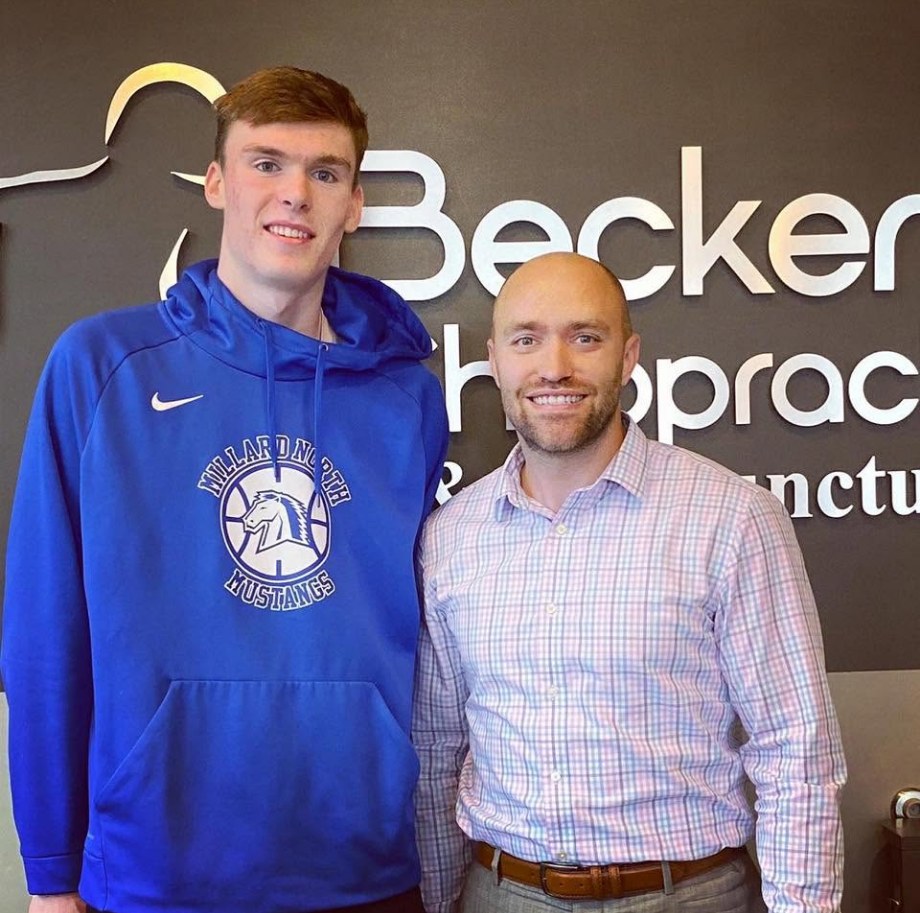
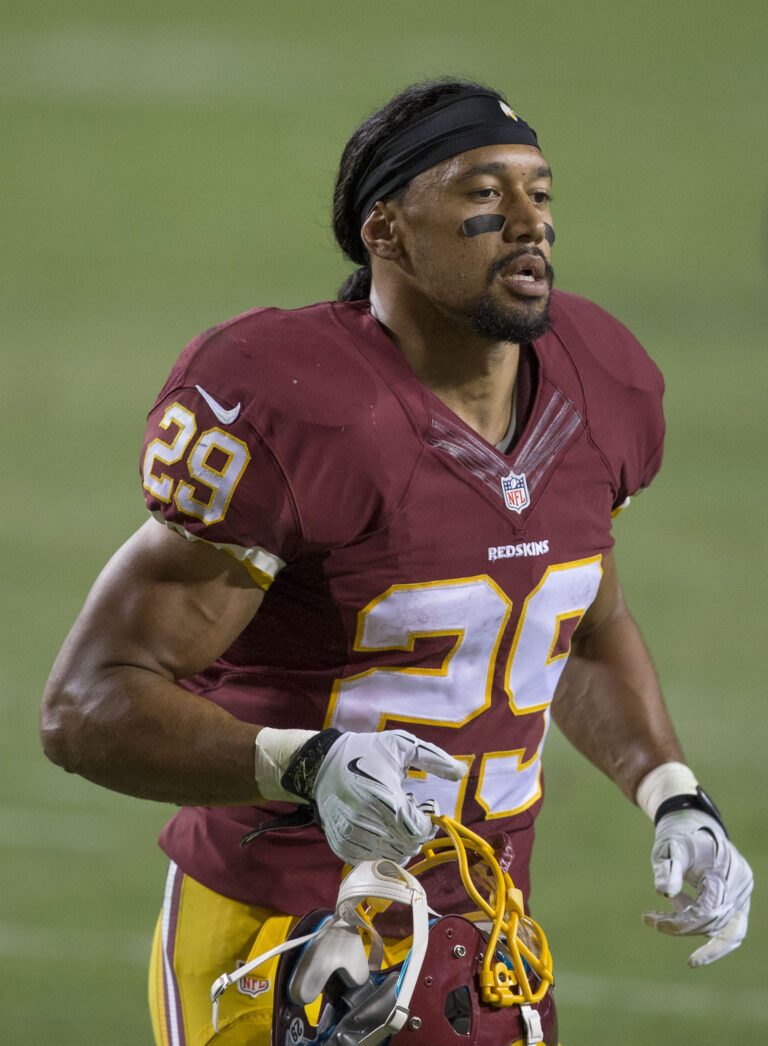
You can watch video testimonials from Danny Woodhead and Dani Mancuso too.
Frequently asked questions
Can I keep training while I’m being treated?
Usually yes, with modifications. Bodies heal better with the right amount of load than with full rest. We will tell you what you can do, what to avoid, and how to know when to push or pull back.
Does dry needling help with sports injuries?
Often a lot. Trigger points in the injured and surrounding muscles are a major driver of pain and limited motion. Releasing them is one of the fastest tools we have for return-to-play care.
Do you treat youth athletes?
Yes, from middle school through college. Young athletes need a few extra considerations, like growth plates and recovery demands, but the same principles apply.
How is this different from physical therapy?
Some overlap, some difference. PT leans heavily on rehab exercise. Adjustments and dry needling are usually not part of standard PT. Many athletes do both, and the combination often gets them back faster than either alone. Here’s the full comparison.
Can chiropractic care help prevent injuries?
To a degree, yes. Athletes who clear up joint restrictions and muscle imbalances before they become problems tend to have fewer injuries. In-season maintenance is common among the athletes we treat.
How do I know if I need imaging?
Most sports injuries do not need it up front. If your case is not responding, if there are signs of structural damage, or if a return-to-play decision depends on knowing tissue integrity, we refer for imaging.
Related reading
Get back to your sport
The longer an injury sits without proper care, the more your body compensates around it, and the longer the eventual recovery. Don’t wait it out.