

Dry Needling in West Omaha | Becker Chiropractic
If your pain has a muscular or nerve compression component, dry needling is often the fastest way to break the pattern. We do it gently, with a method most patients find much more comfortable than what they’ve experienced elsewhere.
- ★★★★★ 5.0 Google (343)
- Best of Omaha
- 18 years in West Omaha
- HSA & FSA accepted
- Sterile, single-use needles
- BBB A+ rated
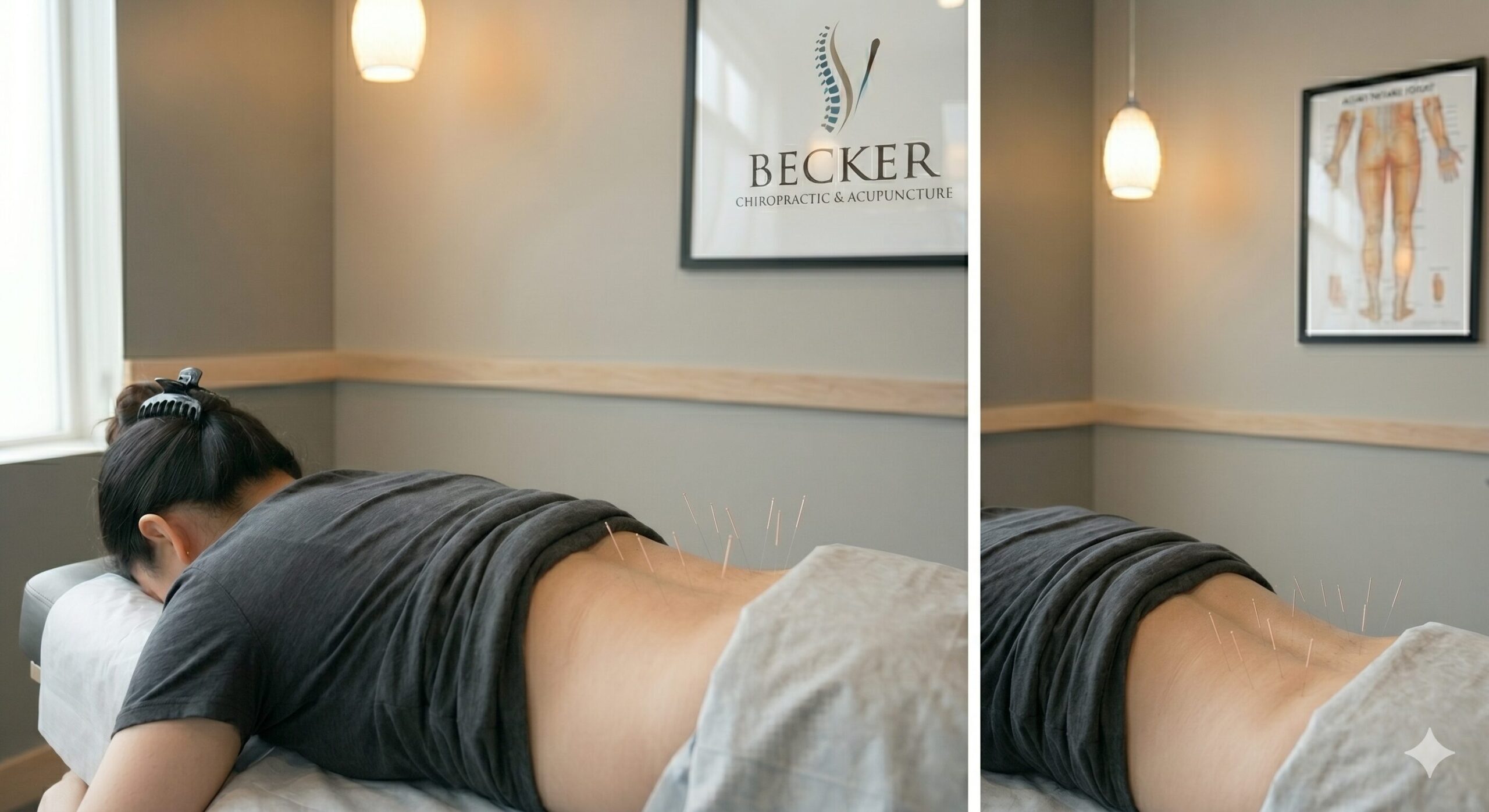
What dry needling treats
Dry needling targets trigger points, which are tight, ropey knots in muscle tissue that cause pain locally and often refer pain elsewhere in the body. Releasing those trigger points takes pressure off nerves, restores normal movement, and resolves pain that hasn’t responded to other treatment.
We use dry needling most often for:
- Back pain, especially in the low back and mid-back
- Neck pain and stiffness, including pain caused by long hours at a desk
- Sciatica, particularly when caused by a tight piriformis muscle
- Shoulder pain, including frozen shoulder and rotator cuff issues
- Sports injuries and overuse pain
- Tension headaches caused by tight neck and jaw muscles
- Plantar fasciitis and chronic foot pain
- Tennis elbow, golfer’s elbow, and other repetitive strain injuries
- TMJ pain and jaw tension
- Hip pain and IT band tightness
If your pain has a muscular or nerve compression component, dry needling is often the fastest way to break the pattern. The Cleveland Clinic has a thorough overview of how dry needling works if you want to dig into the details.
How I do dry needling differently
There’s more than one way to do dry needling, and the experience varies significantly between practitioners.
Some practitioners use long needles and a technique called “flossing,” where the needle is moved aggressively through the tissue. It works, but it’s a painful version of the treatment and a lot of patients don’t tolerate it well. We’ve had patients come to us after a bad first experience elsewhere convinced they’d never try dry needling again.
I do it differently. I place the needle, let it sit, and let the tissue relax around it. The release happens naturally. The therapeutic result is the same. The experience is far more comfortable, and patients are far more willing to come back for follow-up sessions.
If you’ve tried dry needling before and didn’t love the experience, it’s worth knowing there’s more than one way to do it.
What to expect at your first visit
A first dry needling appointment is usually shorter than people expect:
- History and exam. I’ll ask about your pain, your activities, and any previous treatment. I’ll palpate the area to identify the specific trigger points causing the issue.
- Treatment plan. Based on what I find, I’ll explain which muscles we’re targeting and roughly how many sessions you should plan on.
- Treatment. You’ll either lie down or sit, depending on the area being treated. I place a thin, sterile, single-use needle directly into a trigger point. You’ll usually feel the needle, and when the trigger point releases, there’s a brief twitch sensation followed by relief.
- Recovery. Most patients feel some local soreness for a day or two after a session, similar to post-workout muscle soreness. This is normal and a sign that the muscle is releasing.
A typical session takes 15 to 20 minutes and focuses on a few specific trigger points rather than treating the whole body in one visit.
How many sessions will I need?
Most patients need 4 to 8 sessions of dry needling to see real, lasting benefit, though some feel relief sooner. Acute issues (a recent injury, a flare-up that started in the last few weeks) often resolve faster. Chronic problems that have been building for months or years take longer.
If your case involves arthritis, disc degeneration, or other underlying structural issues, the timeline can extend further. We’ll set realistic expectations after the first exam.
Why patients pick Becker for dry needling
Combined with chiropractic care. Most musculoskeletal pain has both a muscle component and a joint or alignment component. Treating only one or the other limits how well you respond. As a chiropractic and dry needling practice, we treat both at the same time when that’s what you need.
A more comfortable approach. The technique we use is significantly more comfortable than the aggressive “flossing” version some practitioners use. Same therapeutic outcome, much less discomfort during the session.
Honest treatment plans. If we don’t think dry needling is the best fit for your specific issue, we’ll tell you. Sometimes patients respond better to chiropractic adjustments alone, sometimes to acupuncture, sometimes to a combination. The goal is your results.
Frequently asked questions
Does dry needling hurt?
There’s a brief moment of discomfort when the needle hits the trigger point, often described as a quick “twitch” or burst of soreness, followed by relief. Most patients say the discomfort is much less than they expected. The version we use (without aggressive flossing) is significantly more comfortable than what some practitioners do.
How is dry needling different from acupuncture?
The needles look the same, but the approach is completely different. Acupuncture is rooted in traditional Chinese medicine and targets specific energy points. Dry needling targets tight muscle trigger points using Western anatomy and sports medicine principles. We have a full breakdown of the differences.
How quickly will I see results?
Some patients feel improvement after the first session, especially for acute muscle issues. Most need 4 to 8 sessions to see real, lasting benefit. Chronic problems often take longer.
Is there any downtime?
Almost none. Most patients feel some local muscle soreness for a day or two, similar to post-workout soreness. Light activity is fine. We usually recommend avoiding heavy lifting and intense exercise for 24 hours after a session.
Can I combine dry needling with chiropractic care?
Yes, and that’s often how we treat patients with significant pain. Adjustments handle the joint and alignment side, dry needling handles the muscle and trigger point side. Together they address the full pain pattern.
Can dry needling help with sciatica?
Often yes. Sciatica caused by a tight piriformis muscle responds especially well to dry needling, since releasing that muscle takes direct pressure off the sciatic nerve. We have a full guide on chiropractic care for sciatica that covers when dry needling is the right approach.
Related reading
What patients say
Real reviews from people treated here. 5.0 stars across 343 Google reviews.
Dr. Becker listened to me describing my pain and explained the method of treatment. His care is outstanding. I would highly recommend Dr. Becker for any chiropractic needs!
I’ve always been hesitant to see a chiropractor for my scoliosis. I’ve tried other treatment options and nothing really helped, and a few made it worse. I’ve only had my first appointment with Dr. Becker, but I am confident that I am now on the correct path to a healthier back.
Dr. Becker got me in quickly when I was having a really stressful week and was in a lot of pain. It made all the difference.
Schedule your first dry needling visit
If you’ve been dealing with muscle pain that won’t quite resolve, dry needling is often the missing piece. The first visit will tell you whether it’s the right approach for your specific issue.